
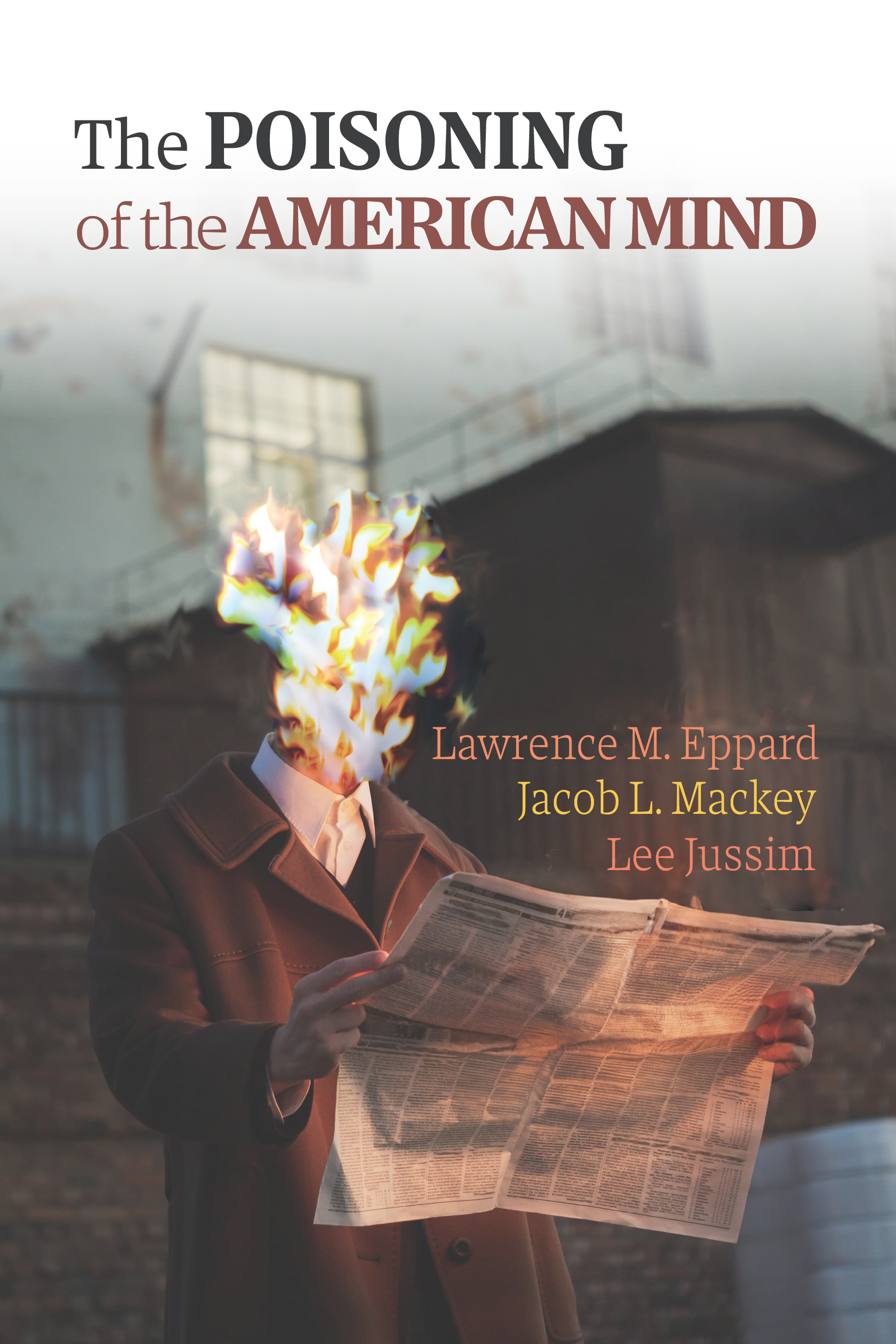
The Poisoning of the American Mind
ISBN 9781942695424 | Paper | $34.50 | July 2024
Description
- Purchase this book:
What would you have to believe in order to dress up as a shaman, paint your face, and storm the U.S. Capitol? What could possibly lead somebody to claim that it upholds white supremacy to encourage hard work, self-reliance, rational thinking, punctuality, and politeness?
Such behaviors would have been unimaginable only a few years ago. And yet here we are, witnessing millions of people across the political spectrum displaying these clear indications of an epistemically poisoned mind. Both red America and blue America are retreating into their own information bubbles, seceding from a common reality. Both consume far too much misinformation and disinformation, developing worldviews that can sometimes be unintelligible to others.
“The Poisoning of the American Mind showcases a much needed and erudite collective defense of truth and critical thinking, two concepts that have become endangered in contemporary America. It should be on the bookshelf of anyone interested in maintaining and enhancing a free and civil democracy.”
— Erec Smith, Associate Professor at York College of Pennsylvania and President of Free Black Thought
About the Editors:
Lawrence M. Eppard is Associate Professor of Sociology at Shippensburg University in Pennsylvania. There he runs the Connors Forum, an initiative to disseminate high-quality, nonpartisan information to the public around issues of news literacy, societal well-being, and the promotion of democracy. His work focuses on economic and racial inequalities, poverty and social welfare, and the media environment in America. Previous publications include the co-edited volumes: On Inequality and Freedom (Oxford University Press), Poorly Understood: What America Gets Wrong about Poverty (Oxford University Press), and Rugged Individualism and the Misunderstanding of American Inequality (Lehigh University Press).
Jacob L. Mackey is Associate Professor of Classicsat Occidental College in Los Angeles. His work applies findings from the cognitive sciences to explain ancient Roman culture. His publications include “Developmental psychologies in the Roman world: Change and continuity,” in History of Psychology, and Belief and Cult: From Intuitions to Institutions in Roman Religion (Princeton University Press). His fifteen years working in minimum wage jobs prior to college and a career in higher education also inform his interest in issues of poverty, class and social problems.
Lee Jussim received his Ph.D. from Michigan in 1987 and came to Rutgers University where he has continued as a professor of social psychology. He has received the APA Early Career Award for Distinguished Contributions to Psychology, the Gordon Allport Intergroup Relations Prize and has published numerous articles and chapters including his recent title, Social Perception and Social Reality: Why Accuracy Dominates Bias and Self-Fulfilling Prophecy, which argues that people are more reasonable and rational than typically acknowledged by social psychological.